Featured Community
Featured Community
Field
Field
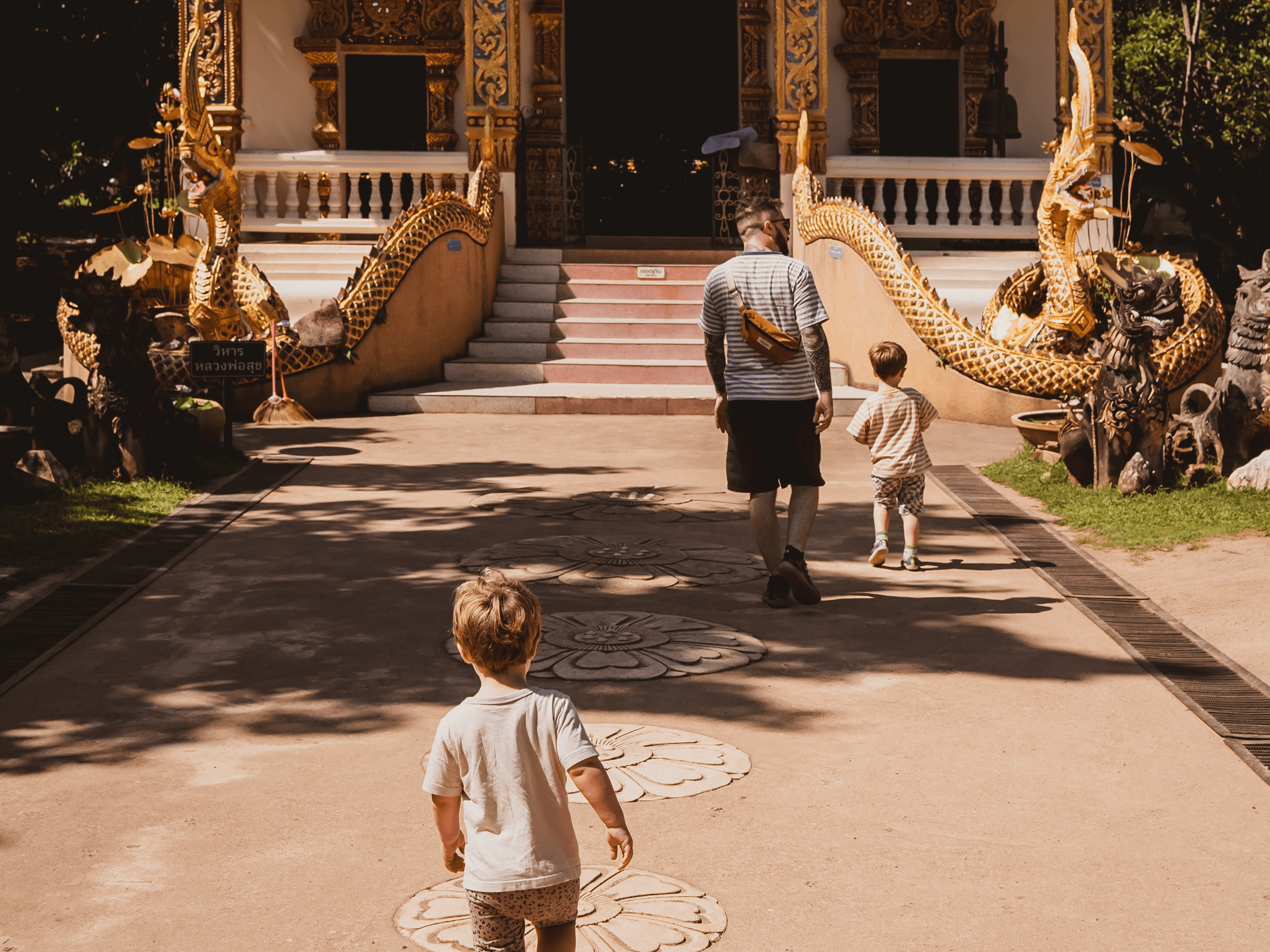
Carolyn, a new parent living on a small Croatian island, was looking for connection, purpose, and a better way to spend her days with her child. That search inspired her to create Field: a community that brings together families from around the world to live, learn, and build in close relationship with the land and sea of Hvar.
Carolyn, a new parent living on a small Croatian island, was looking for connection, purpose, and a better way to spend her days with her child. That search inspired her to create Field: a community that brings together families from around the world to live, learn, and build in close relationship with the land and sea of Hvar.
What do you call what you’ve built?
This is such a great question! I find myself using the term “learning community.” It’s a little clunky, but both parts of that phrase are critical to our mission. Our educational program for kids is the reason families come together in community. And in turn, community enriches our learning by creating new opportunities for service and belonging.
What do you call what you’ve built?
This is such a great question! I find myself using the term “learning community.” It’s a little clunky, but both parts of that phrase are critical to our mission. Our educational program for kids is the reason families come together in community. And in turn, community enriches our learning by creating new opportunities for service and belonging.
Who are you, and what’s your role?
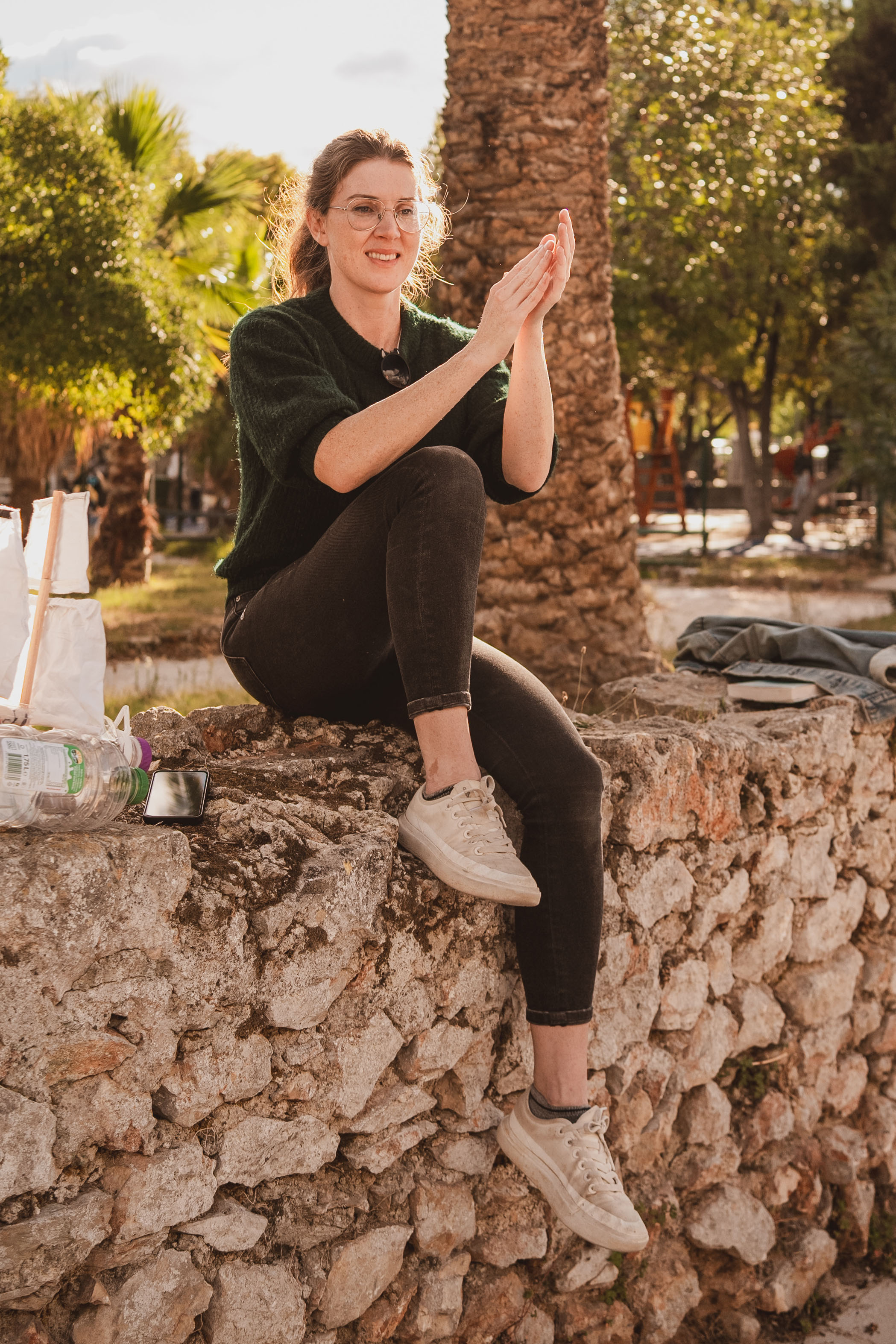
I’m Carolyn. I’m Field’s founder and director. I founded The Field School of Hvar for a lot of reasons—to address parental burnout, the erosion of childhood, the fragility of our local ecosystem, and more. But the main governing thought was to “cultivate my garden,” to borrow from Voltaire.
With everything that’s going on in the world, I decided after my son was born that I would spend my life trying to make one place simply good—a place where people could live normal, fulfilling lives without degrading the natural and human systems we all rely on. Field is the expression of that impulse.
I’m recruiting our permanent staff at the moment, which is very exciting. Right now, I’m working with a learning designer based in San Francisco, as well as a number of local partners, such as our attorney, accountants, sailing instructors, and transportation providers.
Who are you, and what’s your role?
I’m Carolyn. I’m Field’s founder and director. I founded The Field School of Hvar for a lot of reasons—to address parental burnout, the erosion of childhood, the fragility of our local ecosystem, and more. But the main governing thought was to “cultivate my garden,” to borrow from Voltaire.
With everything that’s going on in the world, I decided after my son was born that I would spend my life trying to make one place simply good—a place where people could live normal, fulfilling lives without degrading the natural and human systems we all rely on. Field is the expression of that impulse.
I’m recruiting our permanent staff at the moment, which is very exciting. Right now, I’m working with a learning designer based in San Francisco, as well as a number of local partners, such as our attorney, accountants, sailing instructors, and transportation providers.
Where in the world are you based?
We’re based on the fabulously beautiful island of Hvar in Croatia! We’ll also host a pop-up in Switzerland this August, in partnership with NomadFest, and we’re exploring additional locations for 2027 (hint: it’s another, much bigger island on the opposite side of the world, where you’re also likely to find ancient culture and lots of little shrines).
Where in the world are you based?
We’re based on the fabulously beautiful island of Hvar in Croatia! We’ll also host a pop-up in Switzerland this August, in partnership with NomadFest, and we’re exploring additional locations for 2027 (hint: it’s another, much bigger island on the opposite side of the world, where you’re also likely to find ancient culture and lots of little shrines).
What inspired you to create this community?
I touched on this a bit when I introduced myself, but to be more specific: In the fall of 2023, I was working at a local sustainability firm and my son was almost two, so I’d been thinking obsessively about both sustainability and child development. How were families engaging with the island’s well-being? What kind of landscape was my son’s generation likely to inherit?
I was also experiencing the things that new moms experience—some isolation and erasure, as well as great tenderness and determination. I longed fiercely for a community of parents who wanted to explore nature, beauty, and craft with their children. I didn’t find that, so I decided to “bring the mountain to me.”
What inspired you to create this community?
I touched on this a bit when I introduced myself, but to be more specific: In the fall of 2023, I was working at a local sustainability firm and my son was almost two, so I’d been thinking obsessively about both sustainability and child development. How were families engaging with the island’s well-being? What kind of landscape was my son’s generation likely to inherit?
I was also experiencing the things that new moms experience—some isolation and erasure, as well as great tenderness and determination. I longed fiercely for a community of parents who wanted to explore nature, beauty, and craft with their children. I didn’t find that, so I decided to “bring the mountain to me.”
How has your own life shaped the community you’ve built?
At some point in the future, I hope someone else will run Field. Healthy institutions outlive their founders. At this stage, though, the program is undeniably an extension of my idiosyncratic interests and values.
First of all, I feel that love—particularly the bond between a parent and a child—is the animating force of our world, the only thing that can save us, let’s say. I feel this as a Catholic and also based on hard moments in my life. At Field, I’m trying to create a micro-culture that prioritizes love, one that encourages families to keep trying and lowers the volume on the many, many influences that isolate us from each other.
On a lighter note, both of my parents are educators. I’m really nerdy and always have been. So there’s a lot of history, science, and art in our program, simply because I think that stuff is joyful. And maybe because of my family background, I take our duty as an education provider seriously. I view academic competencies as a foundation of youth agency. Children who feel confident in reading and math, who have a basic mental map of what’s real and what isn’t, are better equipped to chart whatever path they choose as they grow older. It’s not the role of a school to form a child’s character—that fundamentally happens at home—but it is squarely on our shoulders to ensure that children are equipped with the skills they need to find their place in the world.
Finally, I’d say that my professional life before starting this project has helped. I worked in demanding environments, so I have a sense of what professionalism looks like, even if we don’t always achieve it. I also had lots of exposure to startups and early-stage impact projects, so I’m able to put the challenges of growth into that context.
What’s changed since you first opened, and what did you learn the hard way?
The values and vision with which I started this project have remained very consistent, but there have surely been surprises and misfires along the way. One thing I laugh about now is that I expected our 12-year-olds to happily read Ovid in our first year. I also expected them to love vegan meals and long hikes—basically, to share the tastes of a middle-aged English major. That was not quite on the money.
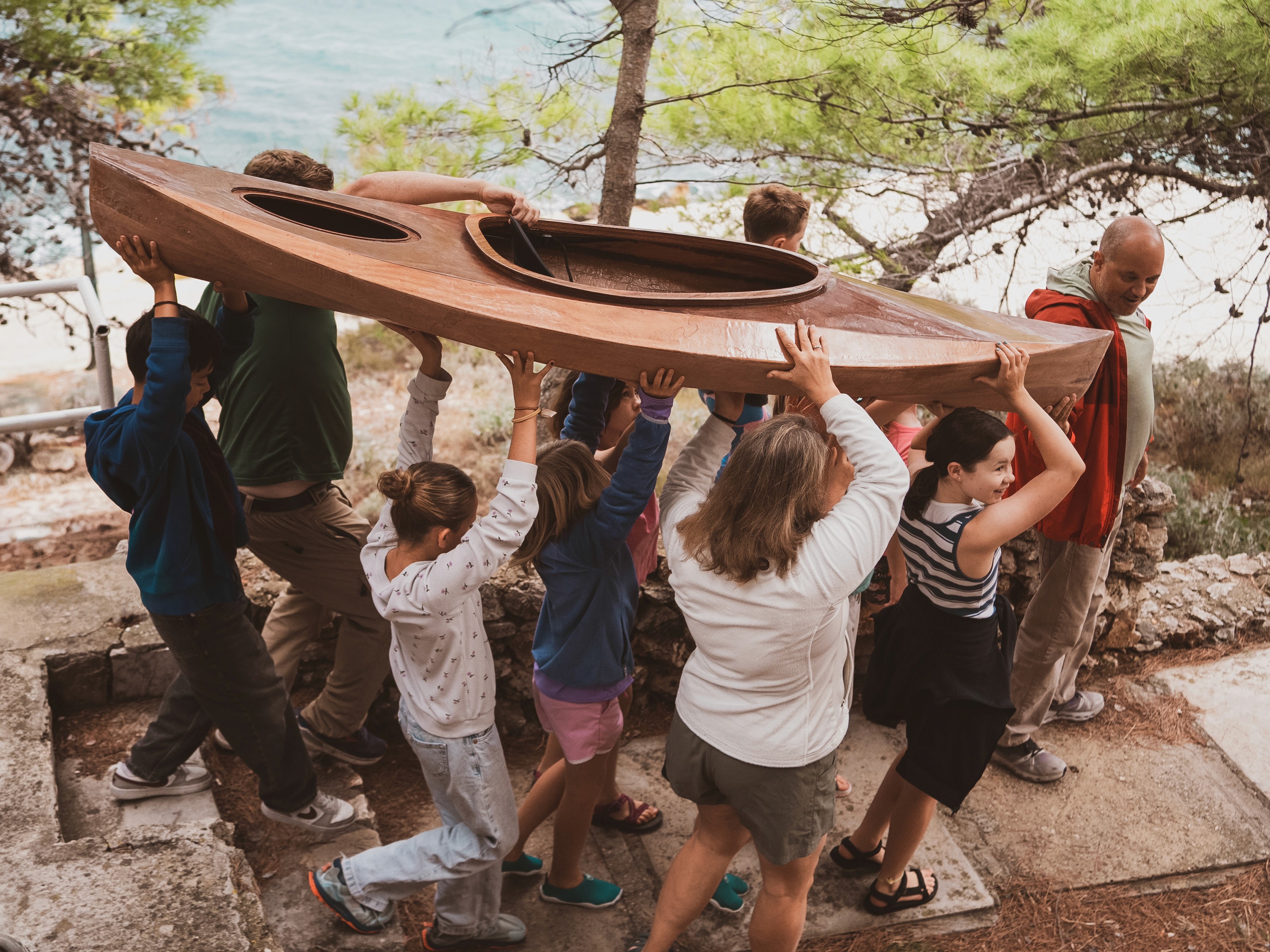
Some activities have required more scaffolding than I anticipated, while others are almost like sleight of hand or magic—you just put it forward and children or adults instinctively make meaning from it. We frequently do design challenges, e.g., “Build a vehicle from recycled materials that can carry three sticks over a rocky beach.”
Those projects carry truly valuable learning, but they are really challenging for most kids—and this can take parents by surprise. Children need to be taught how to break down a problem into parts, how to communicate with each other, and how to move on from failures. In contrast, anything involving cooking, being outside, theater, or swimming is pretty much a guaranteed highlight. Kids will quickly take ownership and stitch together their own meaning from those moments. It’s good to have a balance of both.
In year one, I learned how to make the kids happy and safe, even when I didn’t have all the elements in place that I wanted. In year two, I was really studying how to make the parent community flourish. Now, as we’re heading into year three, I feel cautiously confident that we have sturdier systems and people to support both of those aspects of our program. We have a fully baked curriculum. We have individuals who are solely focused on culture and communication with parents. The goal is always to reduce noise and allow everyone to focus on why we’re here: to enjoy life and be our best selves.
What made you decide to build where you did?
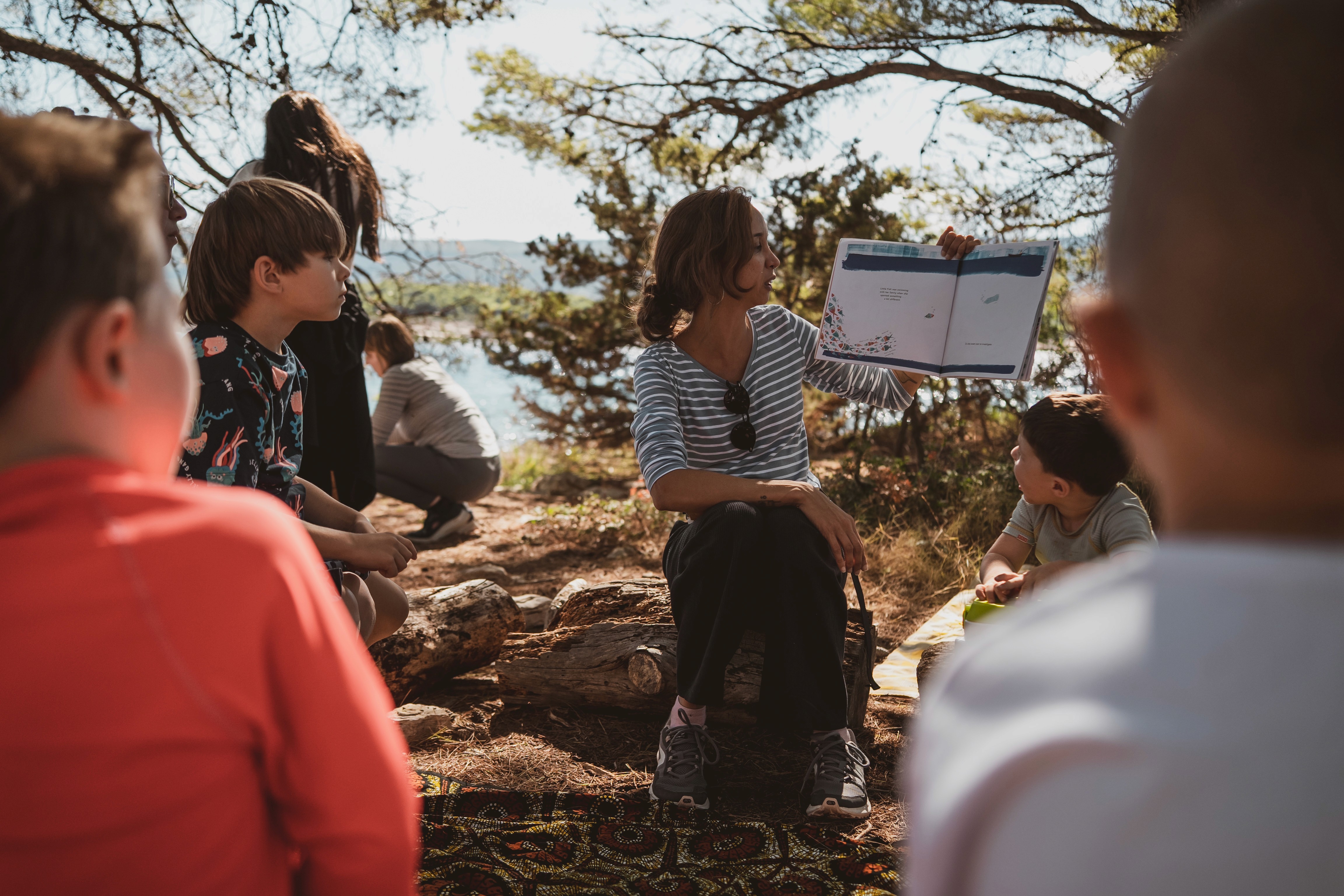
The Field School of Hvar is totally inextricable from Hvar. We’re building an approach to education that is deeply grounded in place, because a reciprocal relationship with one’s environment—social and natural—is the critical element missing from popular pedagogies. It’s the ultimate answer to the question, “Why should I learn this?”
At Field, we learn because we have a natural interest in ourselves, and this place is part of us. Because we need our community, and our community truly needs us. Education often focuses on filling the learner up with skills and abilities without tethering those things to a context. Everything we do at Field comes from and ties back to the particular beauty of the people and landscapes where we live.
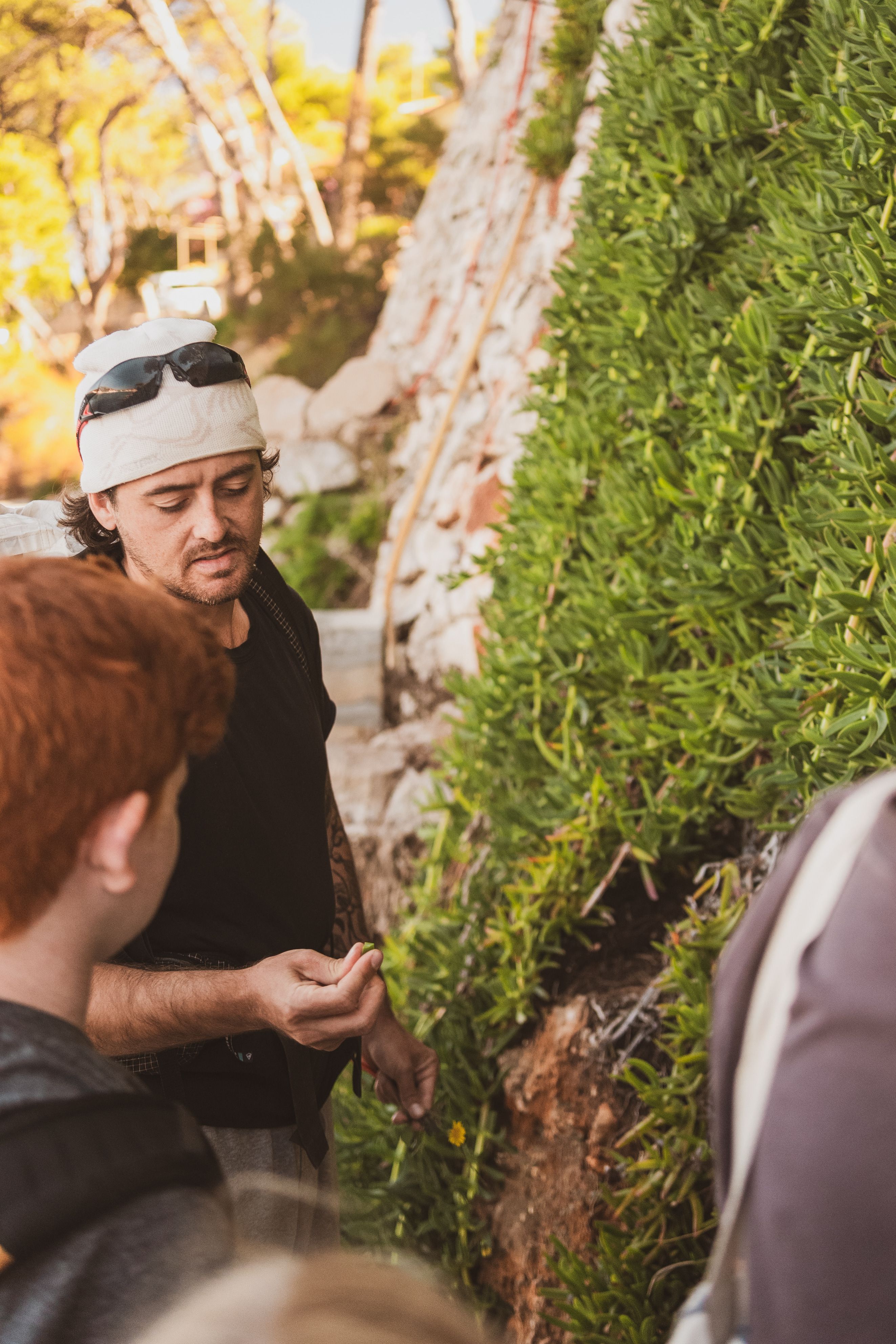
For both children and adults in our program, the main features are the sea, the land, and the town. Our learning center is wrapped in floor-to-ceiling windows that overlook the sea, beyond which rise the Dinaric Alps. Every day, weather and light play out against this dramatic backdrop. Children are always interacting with plants, soil, and objects they find in nature. They study them, build with them, do math and reading with them. Sometimes the land is our explicit focus—we cook, garden, and harvest—but most often it’s the substrate for everyday activity. Finally, we are situated adjacent to a typical Dalmatian coastal village, hewn from limestone and dotted with cafes and other social areas. This is the main theater for our life together, and the embodiment of the culture we explore in stories and museums.
What does a typical day look like?
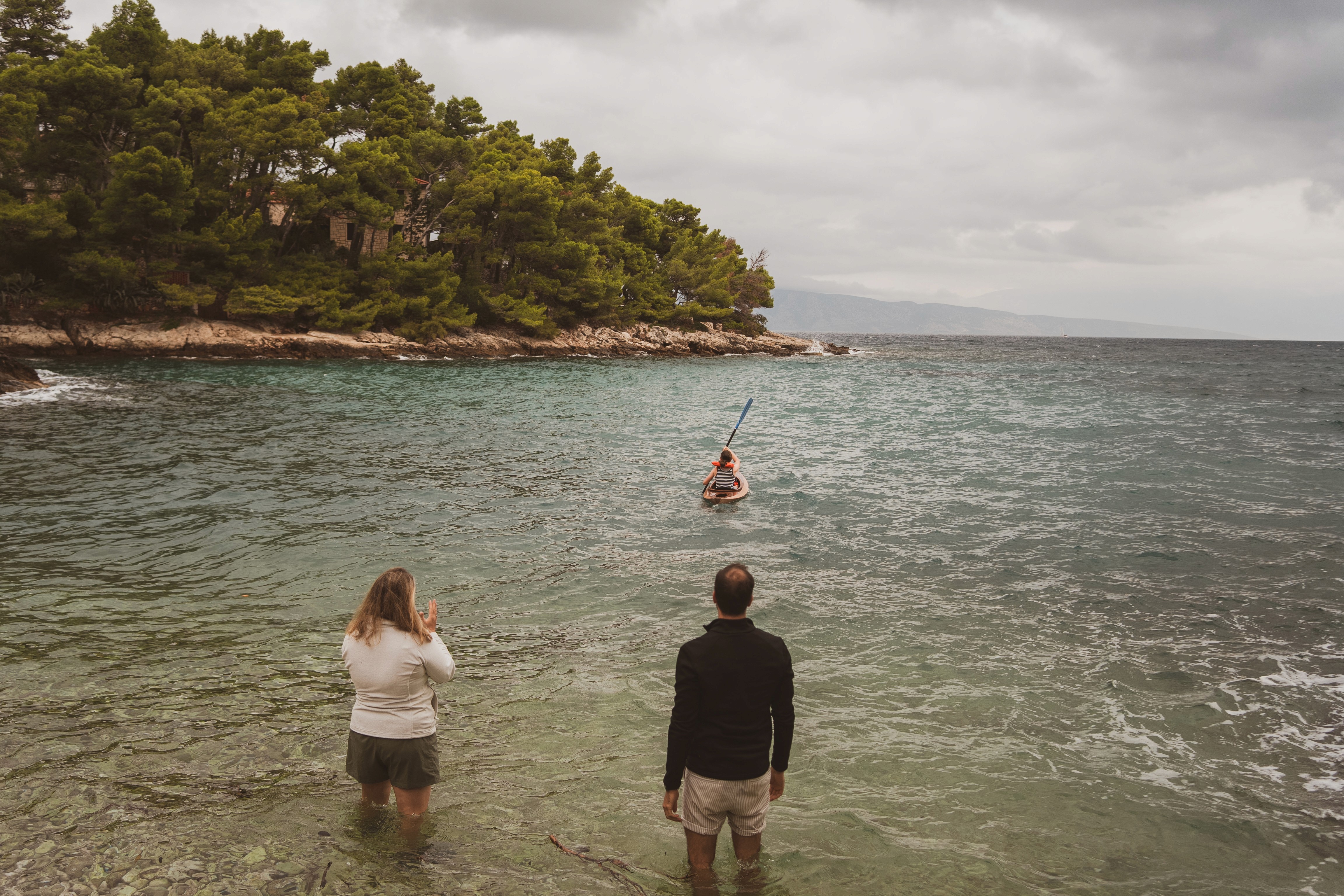
Our rhythms are different in the summer versus the academic year—this is in keeping with the Mediterranean tempo, as well. In the summer, families sleep late, go for a swim, have a big lunch, then nap. In mid-afternoon, our program begins. Parents pick their children up in the late evening and go down to the riva (waterfront promenade) for gelato, play in the park, and just enjoy the wonderful summer atmosphere.
During the academic year, our schedule is more conventional. The program starts at 9:00 and ends at 4:00.
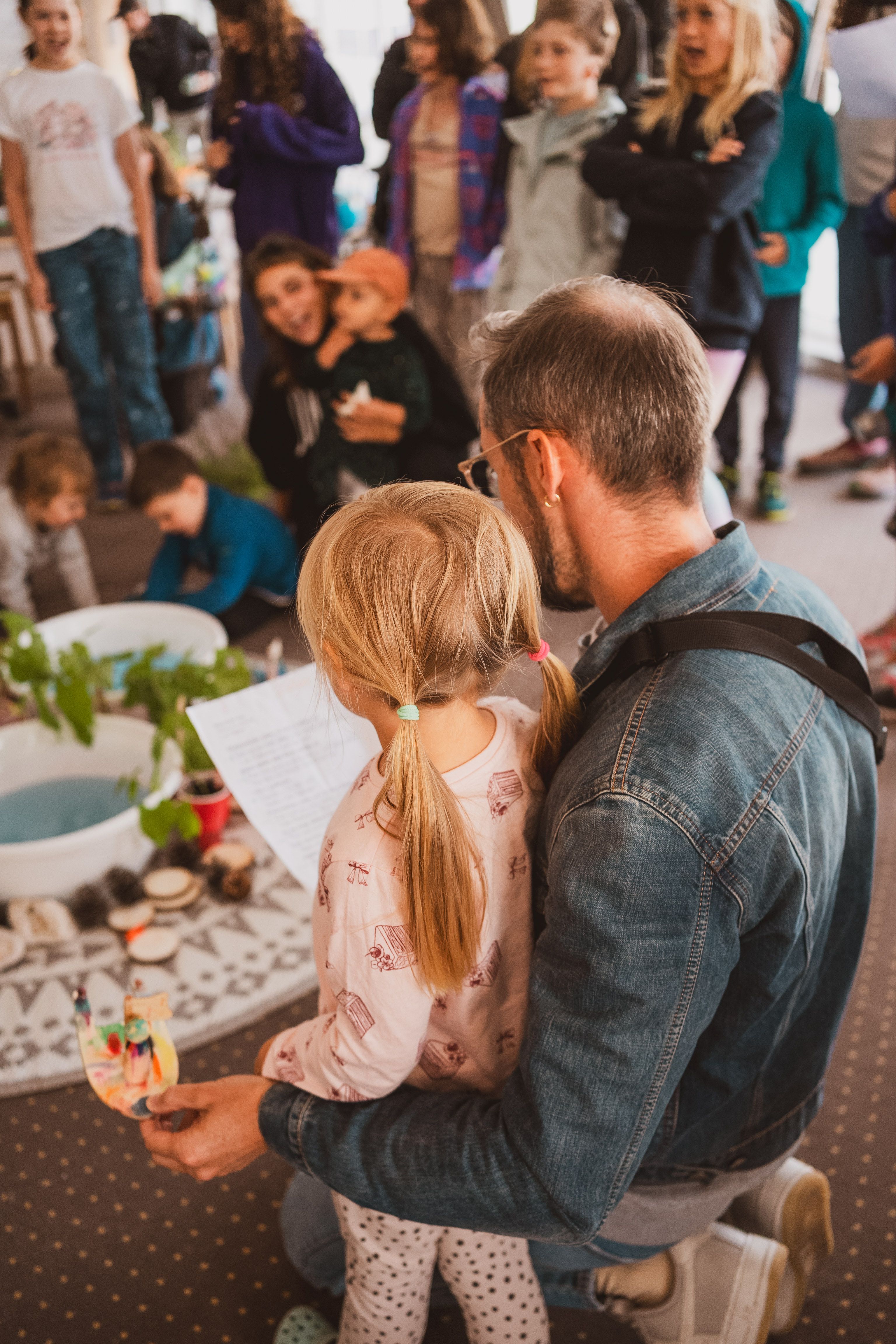
Throughout the year, we start the program day with an all-school circle, where we sing a Croatian song and practice some local phrases. Then learners break into age groups for outdoor skill-building. In the academic year, this is centered on active math and literacy. In the summer, it’s more about science, artisanship, and play on the water. Midway through the program day, learners pause for a meal. Then the second half of the day is spent on project-based learning. In the academic year, two days a week are centered on humanities and two on science. In the summer, sessions are shorter, so there’s only one big project in focus at a time. Finally, the day ends with “big buddies.” Older and younger children pair up to read or play together during pick-up as a way to wind down.
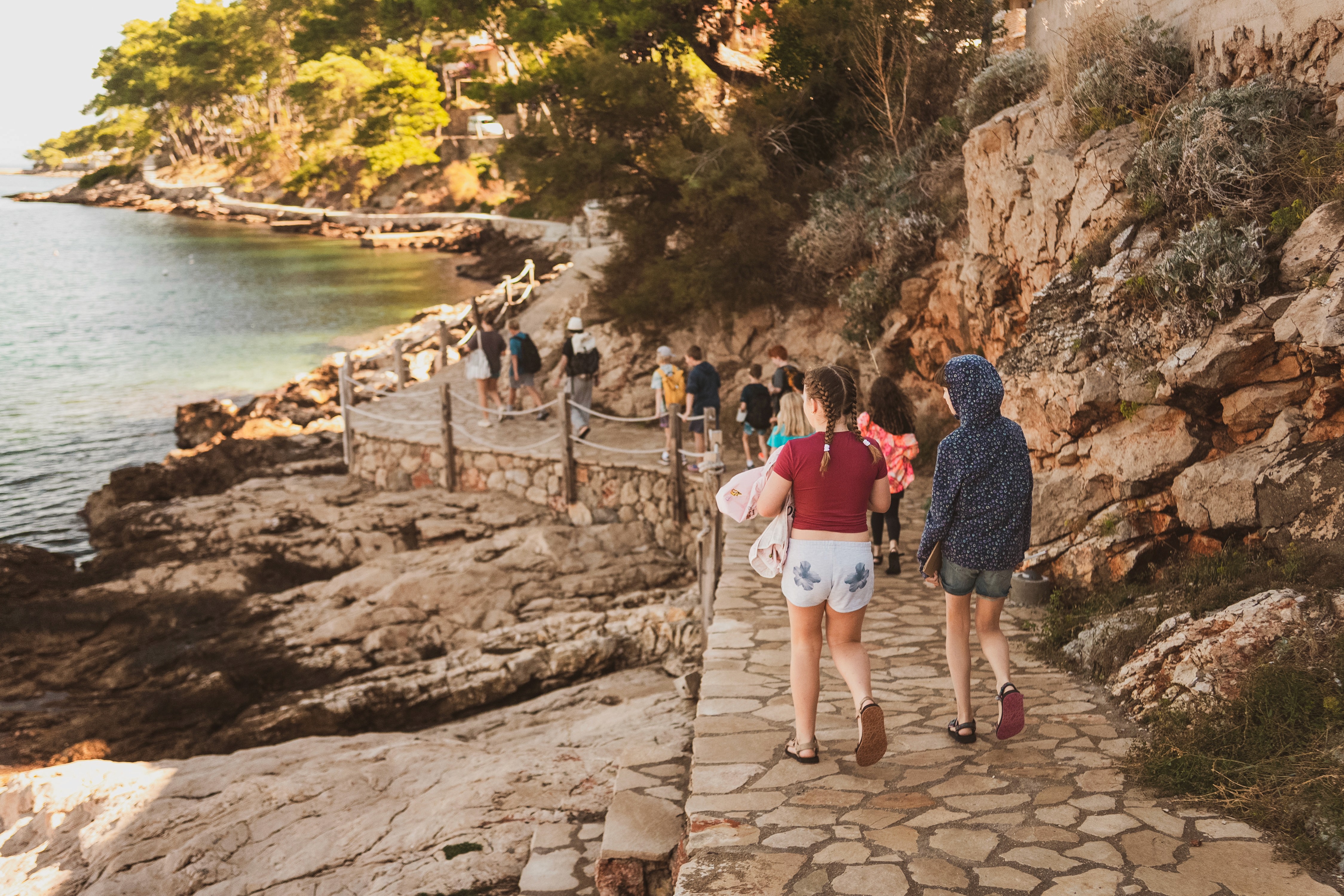
Every week includes a field trip. For little ones, this is usually a boat tour to a forested island. For older children, it’s generally sailing or rock climbing. Each Friday ends with an all-school presentation or project showcase for parents and other community members.
How has your own life shaped the community you’ve built?
At some point in the future, I hope someone else will run Field. Healthy institutions outlive their founders. At this stage, though, the program is undeniably an extension of my idiosyncratic interests and values.
First of all, I feel that love—particularly the bond between a parent and a child—is the animating force of our world, the only thing that can save us, let’s say. I feel this as a Catholic and also based on hard moments in my life. At Field, I’m trying to create a micro-culture that prioritizes love, one that encourages families to keep trying and lowers the volume on the many, many influences that isolate us from each other.
On a lighter note, both of my parents are educators. I’m really nerdy and always have been. So there’s a lot of history, science, and art in our program, simply because I think that stuff is joyful. And maybe because of my family background, I take our duty as an education provider seriously. I view academic competencies as a foundation of youth agency. Children who feel confident in reading and math, who have a basic mental map of what’s real and what isn’t, are better equipped to chart whatever path they choose as they grow older. It’s not the role of a school to form a child’s character—that fundamentally happens at home—but it is squarely on our shoulders to ensure that children are equipped with the skills they need to find their place in the world.
Finally, I’d say that my professional life before starting this project has helped. I worked in demanding environments, so I have a sense of what professionalism looks like, even if we don’t always achieve it. I also had lots of exposure to startups and early-stage impact projects, so I’m able to put the challenges of growth into that context.
What’s changed since you first opened, and what did you learn the hard way?
The values and vision with which I started this project have remained very consistent, but there have surely been surprises and misfires along the way. One thing I laugh about now is that I expected our 12-year-olds to happily read Ovid in our first year. I also expected them to love vegan meals and long hikes—basically, to share the tastes of a middle-aged English major. That was not quite on the money.
Some activities have required more scaffolding than I anticipated, while others are almost like sleight of hand or magic—you just put it forward and children or adults instinctively make meaning from it. We frequently do design challenges, e.g., “Build a vehicle from recycled materials that can carry three sticks over a rocky beach.”
Those projects carry truly valuable learning, but they are really challenging for most kids—and this can take parents by surprise. Children need to be taught how to break down a problem into parts, how to communicate with each other, and how to move on from failures. In contrast, anything involving cooking, being outside, theater, or swimming is pretty much a guaranteed highlight. Kids will quickly take ownership and stitch together their own meaning from those moments. It’s good to have a balance of both.
In year one, I learned how to make the kids happy and safe, even when I didn’t have all the elements in place that I wanted. In year two, I was really studying how to make the parent community flourish. Now, as we’re heading into year three, I feel cautiously confident that we have sturdier systems and people to support both of those aspects of our program. We have a fully baked curriculum. We have individuals who are solely focused on culture and communication with parents. The goal is always to reduce noise and allow everyone to focus on why we’re here: to enjoy life and be our best selves.
What made you decide to build where you did?
The Field School of Hvar is totally inextricable from Hvar. We’re building an approach to education that is deeply grounded in place, because a reciprocal relationship with one’s environment—social and natural—is the critical element missing from popular pedagogies. It’s the ultimate answer to the question, “Why should I learn this?”
At Field, we learn because we have a natural interest in ourselves, and this place is part of us. Because we need our community, and our community truly needs us. Education often focuses on filling the learner up with skills and abilities without tethering those things to a context. Everything we do at Field comes from and ties back to the particular beauty of the people and landscapes where we live.
For both children and adults in our program, the main features are the sea, the land, and the town. Our learning center is wrapped in floor-to-ceiling windows that overlook the sea, beyond which rise the Dinaric Alps. Every day, weather and light play out against this dramatic backdrop. Children are always interacting with plants, soil, and objects they find in nature. They study them, build with them, do math and reading with them. Sometimes the land is our explicit focus—we cook, garden, and harvest—but most often it’s the substrate for everyday activity. Finally, we are situated adjacent to a typical Dalmatian coastal village, hewn from limestone and dotted with cafes and other social areas. This is the main theater for our life together, and the embodiment of the culture we explore in stories and museums.
What does a typical day look like?
Our rhythms are different in the summer versus the academic year—this is in keeping with the Mediterranean tempo, as well. In the summer, families sleep late, go for a swim, have a big lunch, then nap. In mid-afternoon, our program begins. Parents pick their children up in the late evening and go down to the riva (waterfront promenade) for gelato, play in the park, and just enjoy the wonderful summer atmosphere.
During the academic year, our schedule is more conventional. The program starts at 9:00 and ends at 4:00.
Throughout the year, we start the program day with an all-school circle, where we sing a Croatian song and practice some local phrases. Then learners break into age groups for outdoor skill-building. In the academic year, this is centered on active math and literacy. In the summer, it’s more about science, artisanship, and play on the water. Midway through the program day, learners pause for a meal. Then the second half of the day is spent on project-based learning. In the academic year, two days a week are centered on humanities and two on science. In the summer, sessions are shorter, so there’s only one big project in focus at a time. Finally, the day ends with “big buddies.” Older and younger children pair up to read or play together during pick-up as a way to wind down.
Every week includes a field trip. For little ones, this is usually a boat tour to a forested island. For older children, it’s generally sailing or rock climbing. Each Friday ends with an all-school presentation or project showcase for parents and other community members.
How would you describe the feel of your community to someone who’s never been?
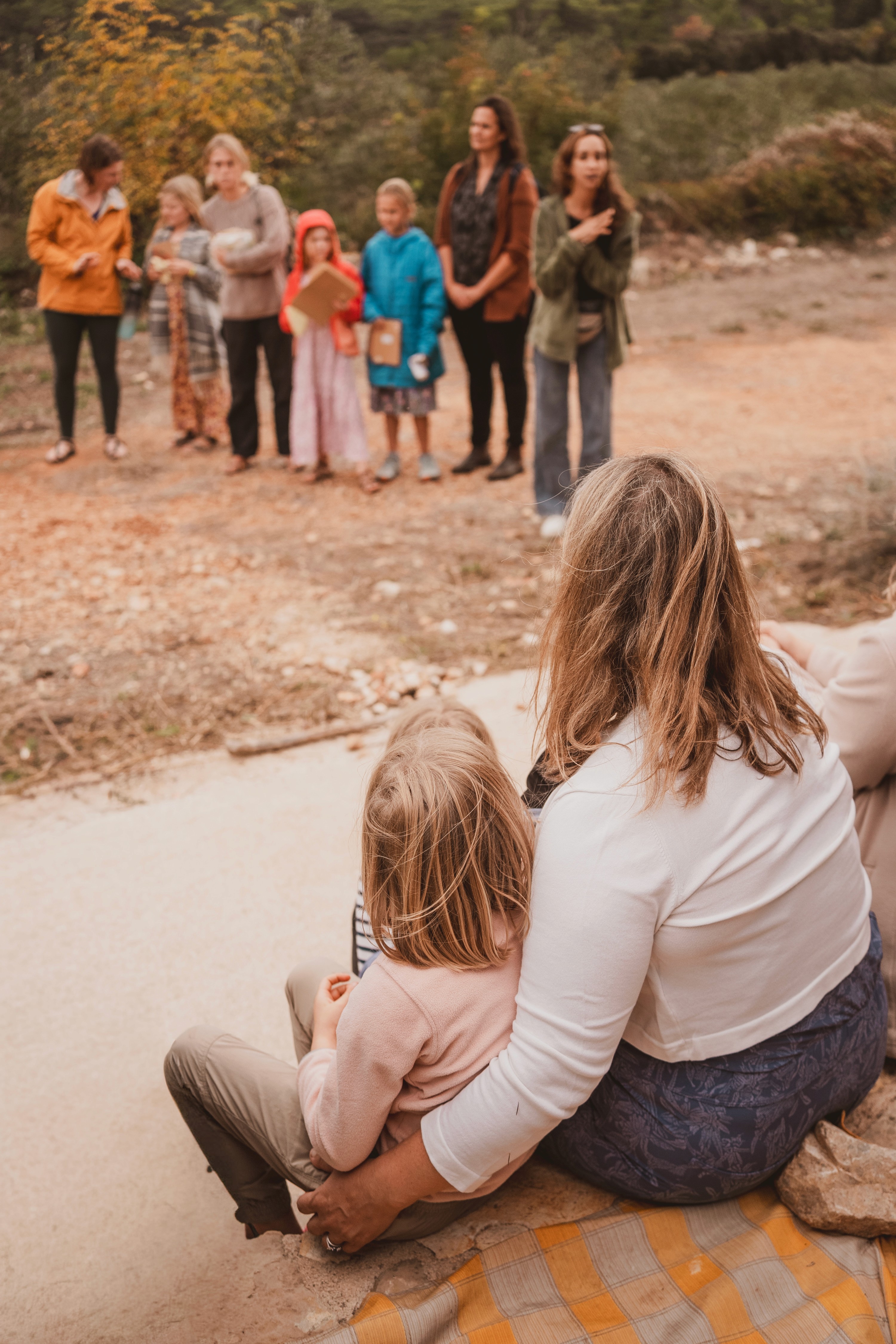
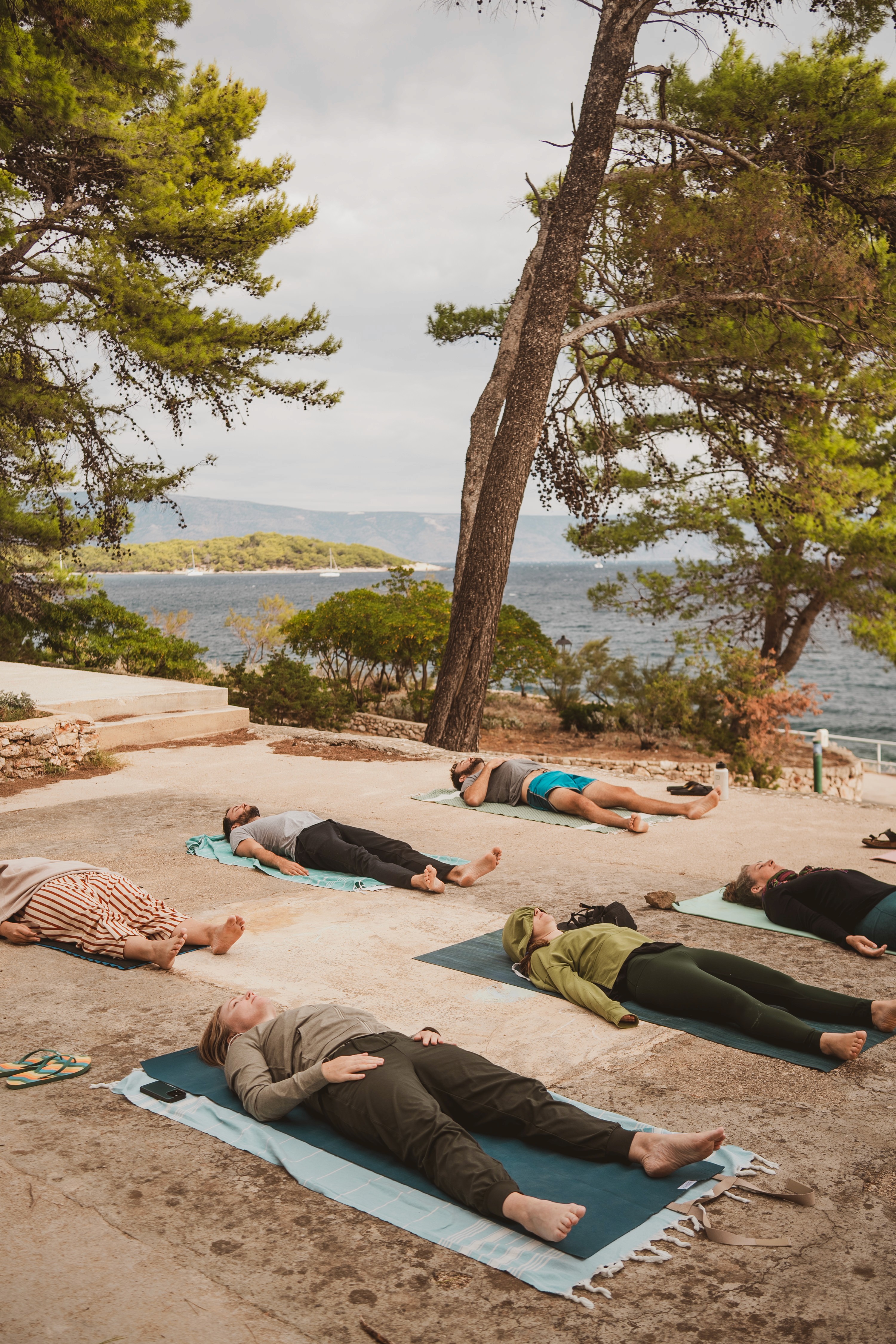
This is such an interesting question! I think Hvar has a purity, a stillness that’s hard to convey. With children, there’s always a wonderful element of chaos and fun, and the island is very convivial and buzzy in the summer. But perhaps because we’re right on the sea, there’s a certain silence that seems to sit underneath it all. Parents have told me they feel this, too. We draw on it from time to time to ground our learners and community through meditation or listening exercises, but I think a lot of our families also find it on their own in private moments.
How would you describe the feel of your community to someone who’s never been?
This is such an interesting question! I think Hvar has a purity, a stillness that’s hard to convey. With children, there’s always a wonderful element of chaos and fun, and the island is very convivial and buzzy in the summer. But perhaps because we’re right on the sea, there’s a certain silence that seems to sit underneath it all. Parents have told me they feel this, too. We draw on it from time to time to ground our learners and community through meditation or listening exercises, but I think a lot of our families also find it on their own in private moments.
What do you believe children need most, and how does your community create space for that?
I touched on this earlier. The major shortcoming in modern education is that it’s “mass-produced” or formulaic. A Montessori classroom looks more or less the same anywhere. A Khan Academy lesson looks the same everywhere. In the same way that cafes and hotels look the same in Shanghai as they do in Dallas, schools—even “fancy” ones—raise children in a generic way, divorced of context and “thisness.”
The result is adolescents and adults who, not surprisingly, feel adrift and mutable. We ask young people raised in this way to basically construct their personalities without much to react to except standardized environments and vague exhortations: “be true to yourself” or “be kind to others.”
AI is accelerating this dynamic.
At Field, we seek to foster “mattering”—the way a particular child matters to a particular set of people, a particular culture, a particular group of living things that flourish or wither based on his or her choices.
This is tied, for me, to the concept of youth agency. Agency means being the driver in your own life. It’s a cornerstone of motivation and, ultimately, well-being. But it’s not valuable to have freedom and choice if those decisions feel like a game without consequences. One’s position in a community is what creates stakes. It is telling a child (truthfully) that they have real power, because their decisions impact real-world things. Schools are usually very artificial environments, where a child’s choices only affect his or her own “score” in the game of school. This is poor training for adulthood.
What do you believe children need most, and how does your community create space for that?
I touched on this earlier. The major shortcoming in modern education is that it’s “mass-produced” or formulaic. A Montessori classroom looks more or less the same anywhere. A Khan Academy lesson looks the same everywhere. In the same way that cafes and hotels look the same in Shanghai as they do in Dallas, schools—even “fancy” ones—raise children in a generic way, divorced of context and “thisness.”
The result is adolescents and adults who, not surprisingly, feel adrift and mutable. We ask young people raised in this way to basically construct their personalities without much to react to except standardized environments and vague exhortations: “be true to yourself” or “be kind to others.”
AI is accelerating this dynamic.
At Field, we seek to foster “mattering”—the way a particular child matters to a particular set of people, a particular culture, a particular group of living things that flourish or wither based on his or her choices.
This is tied, for me, to the concept of youth agency. Agency means being the driver in your own life. It’s a cornerstone of motivation and, ultimately, well-being. But it’s not valuable to have freedom and choice if those decisions feel like a game without consequences. One’s position in a community is what creates stakes. It is telling a child (truthfully) that they have real power, because their decisions impact real-world things. Schools are usually very artificial environments, where a child’s choices only affect his or her own “score” in the game of school. This is poor training for adulthood.
What moments make you think, "This is why we do this"?
An old acquaintance of mine had an incredible bathroom, tiled with the phrase: “In your body is a good place to be.”
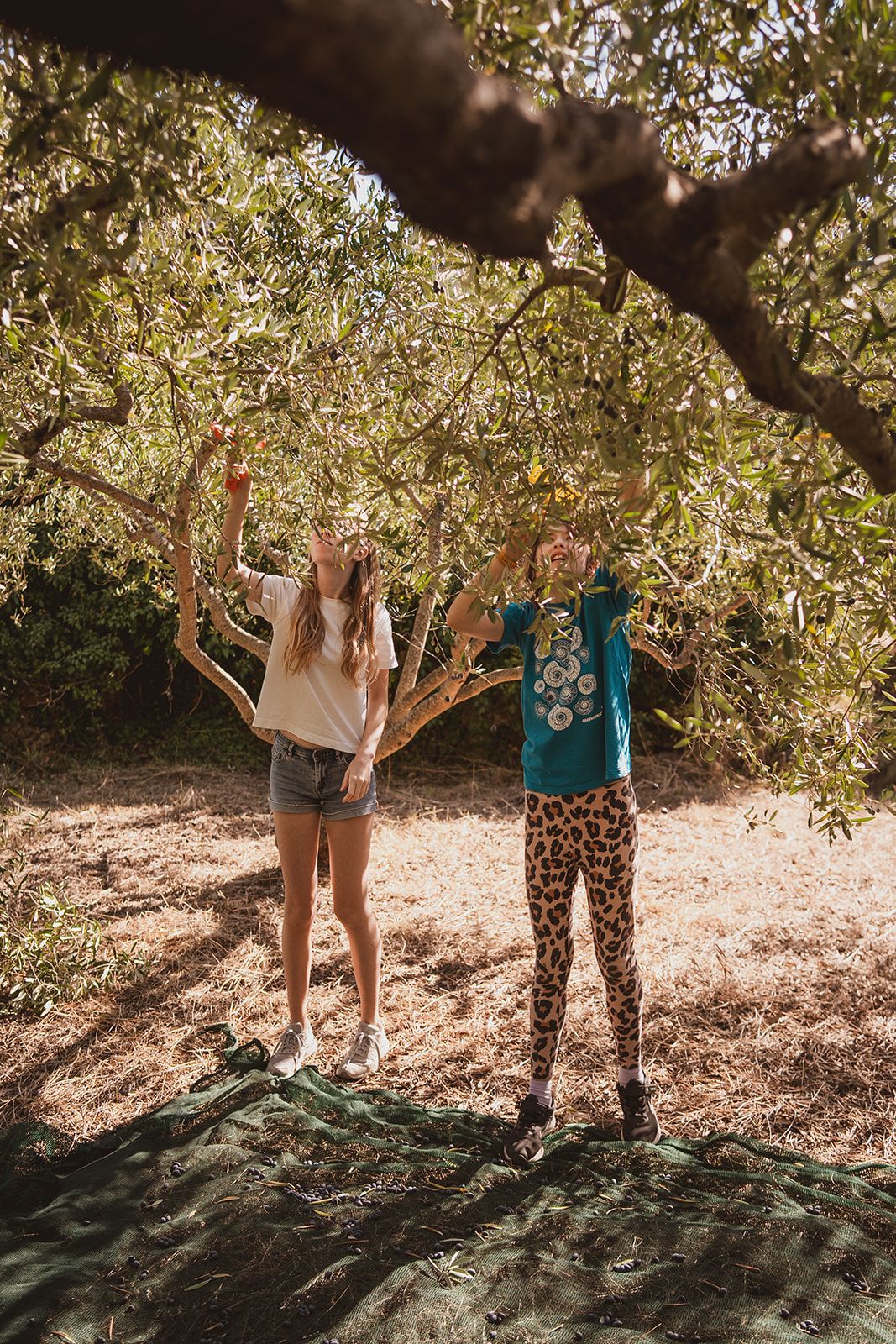
It’s an odd phrase, and it has stuck with me for that reason. But it fills me with peace to see that parents and children seem very happy to be in their bodies when they’re in our program—plucking tomatoes from the vine, faces pink and smiling from the sun, collecting rocks of different colors and textures.
To borrow another favorite phrase from the poet Philip Larkin, “we live in days.”
I see that families in our program are genuinely, fully alive. They are fully present in their days. Too often, time slips away from us. To give families “back” a bit of their time on earth really feels like the best thing I could be doing with my life.
What moments make you think, "This is why we do this"?
An old acquaintance of mine had an incredible bathroom, tiled with the phrase: “In your body is a good place to be.”
It’s an odd phrase, and it has stuck with me for that reason. But it fills me with peace to see that parents and children seem very happy to be in their bodies when they’re in our program—plucking tomatoes from the vine, faces pink and smiling from the sun, collecting rocks of different colors and textures.
To borrow another favorite phrase from the poet Philip Larkin, “we live in days.”
I see that families in our program are genuinely, fully alive. They are fully present in their days. Too often, time slips away from us. To give families “back” a bit of their time on earth really feels like the best thing I could be doing with my life.
What happens behind the scenes that most families don’t realise?
I work about 60 hours per week year-round in order to run our program. What on earth am I doing? A typical “off-season” week is made up of program design; recruiting and onboarding teachers; marketing and admissions; and accounting and compliance. I should be writing grants, but I don’t have time for it.
Today, for example, I spoke with two prospective families. I met with a local regenerative farmer to arrange farm visits, permaculture training for our pre-teens, and professional development for teachers. I filed 1099s for our contract workers, and I filled out this wonderful interview! I confirmed contract details with our accommodation partner, The Fontana, and cleared my inbox. I reviewed a second-round interview for a prospective hire with a parent advisor and confirmed tax information with our Croatian nonprofit accountant. Tonight, after I put my son to bed, I’ll meet with collaborators in LA and Split to put flesh on the bone for our pilot program for international high schoolers. And of course, I’ve planned more work in my task management app.
A program like ours that promises first-rate child enrichment, a restorative experience for parents, and a tangible net benefit for our locality requires a real team of people. I’ve always felt appreciated by our families, but it has even surprised me how much work it takes to create something that somehow just feels “as it should be.”
I think a lesson for hub operators—and those who participate—is to understand that programs with a really high level of customer service and ambitious, creative enrichment for children need a certain level of scale in order to function. One person can’t do it all for very long, so the program needs to either find a way to serve more learners for a longer period of time or greatly simplify its offering.
What happens behind the scenes that most families don’t realise?
I work about 60 hours per week year-round in order to run our program. What on earth am I doing? A typical “off-season” week is made up of program design; recruiting and onboarding teachers; marketing and admissions; and accounting and compliance. I should be writing grants, but I don’t have time for it.
Today, for example, I spoke with two prospective families. I met with a local regenerative farmer to arrange farm visits, permaculture training for our pre-teens, and professional development for teachers. I filed 1099s for our contract workers, and I filled out this wonderful interview! I confirmed contract details with our accommodation partner, The Fontana, and cleared my inbox. I reviewed a second-round interview for a prospective hire with a parent advisor and confirmed tax information with our Croatian nonprofit accountant. Tonight, after I put my son to bed, I’ll meet with collaborators in LA and Split to put flesh on the bone for our pilot program for international high schoolers. And of course, I’ve planned more work in my task management app.
A program like ours that promises first-rate child enrichment, a restorative experience for parents, and a tangible net benefit for our locality requires a real team of people. I’ve always felt appreciated by our families, but it has even surprised me how much work it takes to create something that somehow just feels “as it should be.”
I think a lesson for hub operators—and those who participate—is to understand that programs with a really high level of customer service and ambitious, creative enrichment for children need a certain level of scale in order to function. One person can’t do it all for very long, so the program needs to either find a way to serve more learners for a longer period of time or greatly simplify its offering.
What are your hopes for the future of your community?
We’re launching a full academic-year program this coming year. It’s very important to me—and to the sustainability of this project—that we build a consistent community of faculty, parents, and learners over the next few years: a strong culture and ecosystem that can welcome new and seasonal families with well-developed resources and warmth.
It’s also very important to me that Field establishes “workshops” that clearly benefit our island community in the coming years. Specifically, I want us to accelerate organic agriculture and heritage trades here on the island through our educational offerings and school facilities.
What are your hopes for the future of your community?
We’re launching a full academic-year program this coming year. It’s very important to me—and to the sustainability of this project—that we build a consistent community of faculty, parents, and learners over the next few years: a strong culture and ecosystem that can welcome new and seasonal families with well-developed resources and warmth.
It’s also very important to me that Field establishes “workshops” that clearly benefit our island community in the coming years. Specifically, I want us to accelerate organic agriculture and heritage trades here on the island through our educational offerings and school facilities.
Where do you see the worldschooling movement heading next?
I think worldschooling is still very new. There are a lot of models being tried, which is great, because there are so many kinds of families.
I think the professional and financial side of this is still extremely hard for families. In the future, hubs that offer parents a way to make money, start businesses, or find local employment could be a really powerful addition to the landscape. It’s something I think a lot about.
I would also say that there’s a need for some kind of accreditation service. This may happen naturally as more “cowboy” operators step back or are forced to close, but there will always be new entrants. In any childcare setting, there are urgent questions around legality and safeguarding. Many of the people who start hubs—myself included—do not have a professional background in education. I strongly feel that the movement would benefit from a third party that could provide a stamp or checklist to guide both would-be hub operators and prospective families.
Where do you see the worldschooling movement heading next?
I think worldschooling is still very new. There are a lot of models being tried, which is great, because there are so many kinds of families.
I think the professional and financial side of this is still extremely hard for families. In the future, hubs that offer parents a way to make money, start businesses, or find local employment could be a really powerful addition to the landscape. It’s something I think a lot about.
I would also say that there’s a need for some kind of accreditation service. This may happen naturally as more “cowboy” operators step back or are forced to close, but there will always be new entrants. In any childcare setting, there are urgent questions around legality and safeguarding. Many of the people who start hubs—myself included—do not have a professional background in education. I strongly feel that the movement would benefit from a third party that could provide a stamp or checklist to guide both would-be hub operators and prospective families.
What’s one thing you wish you’d known when you started?
I personally struggle to pace myself. It’s exciting to create something that comes from a place of passion and ideals, but that excitement has sometimes caused me to overextend. Likewise, it can feel like if you’re not offering something new and amazing, you won’t stand out in the crowd—but experience and authenticity are their own virtues.
I’m reading Greek myths with my son, and the story of Phaeton comes to mind. I’m so excited to try to do something that I might not be ready for. I have a very strong belief in my ability to overcome obstacles. But I have to really focus on harnessing those ambitions, so they don’t drag me all over the place.
What’s one thing you wish you’d known when you started?
I personally struggle to pace myself. It’s exciting to create something that comes from a place of passion and ideals, but that excitement has sometimes caused me to overextend. Likewise, it can feel like if you’re not offering something new and amazing, you won’t stand out in the crowd—but experience and authenticity are their own virtues.
I’m reading Greek myths with my son, and the story of Phaeton comes to mind. I’m so excited to try to do something that I might not be ready for. I have a very strong belief in my ability to overcome obstacles. But I have to really focus on harnessing those ambitions, so they don’t drag me all over the place.
What would you say to a family who wants this life, but hasn’t taken the leap yet?
It's not all or nothing.
You are not failing your kids by worldschooling OR by not doing worldschooling.
You can do a little bit of travel and add a ton of sparkle to a humdrum routine. You can keep your boring job and add some routine to tether a wild adventure.
You can worldschool where you are. Maybe there’s undiscovered diversity in your own city. Maybe there’s an alternative education group. Maybe there are parks and cultural institutions that could be part of a weekly field trip. Maybe you could start your own makerspace / children’s art studio / community garden.
Try before you buy.
think there’s a fear that if you don’t do this when your children are young, you’ll never get to do it. I would disagree. Older children are more articulate (!) about their preferences, but the socio-emotional impact is similar—which is to say that there are positives and negatives, and some kids will cope better than others. Everyone will be fine!
Finally, is there anything we didn’t ask that you’d love to share?
Oh dear—I’ve already written a novel. I hope this will be edited for clarity and sanity! Thank you all so much. ❤️
What would you say to a family who wants this life, but hasn’t taken the leap yet?
It's not all or nothing.
You are not failing your kids by worldschooling OR by not doing worldschooling.
You can do a little bit of travel and add a ton of sparkle to a humdrum routine. You can keep your boring job and add some routine to tether a wild adventure.
You can worldschool where you are. Maybe there’s undiscovered diversity in your own city. Maybe there’s an alternative education group. Maybe there are parks and cultural institutions that could be part of a weekly field trip. Maybe you could start your own makerspace / children’s art studio / community garden.
Try before you buy.
think there’s a fear that if you don’t do this when your children are young, you’ll never get to do it. I would disagree. Older children are more articulate (!) about their preferences, but the socio-emotional impact is similar—which is to say that there are positives and negatives, and some kids will cope better than others. Everyone will be fine!
Finally, is there anything we didn’t ask that you’d love to share?
Oh dear—I’ve already written a novel. I hope this will be edited for clarity and sanity! Thank you all so much. ❤️
Field is building something rare: a community where learning is tethered to real life and children feel that they truly matter. Visit fieldschoolhvar.org to learn more, and make sure to follow Field on Instagram and Facebook.
Field is building something rare: a community where learning is tethered to real life and children feel that they truly matter. Visit fieldschoolhvar.org to learn more, and make sure to follow Field on Instagram and Facebook.
Read more stories like this
Read more stories like this
If you enjoyed this, we can email you a link to each one we publish, as they happen!
If you enjoyed this, we can email you a link to each one we publish, as they happen!
(Don’t worry, you can unsubscribe from them anytime)
(Don’t worry, you can unsubscribe from them anytime)